AI That Acts: What Agentic Systems Could Mean for the Economy and the Future of Work
January 12, 2026
 Equal Housing Lender. © 2026 M&T Bank and its affiliates and subsidiaries. NMLS #381076. M&T Bank Member FDIC.

Institutional Services Insights
Wealth Management Insights
Who We Are
Log In
Select Business Area

Our Services
Institutional Services Insights
AI is entering a new phase—one where systems move from analyzing data to taking action. In this episode of Capital Considerations, Tony Roth and Swami Chandrasekaran, global head of AI and Data Labs at KPMG, break down how agentic AI can plan, reason, and execute tasks, unlocking new levels of productivity across finance, investing, and risk management. They explore where we are in the AI adoption curve, what’s holding back broad productivity gains, and which sectors and roles may be most transformed as agentic systems scale. They also discuss how data, compute, and trust will shape real-world adoption.
The opinions of Swami Chandrasekaran are their own and do not necessarily represent those of Wilmington Trust, M&T Bank or any of its affiliates. Wilmington Trust, M&T Bank and its subsidiaries are not affiliated with KPMG.
Tony Roth, Chief Investment Officer
Swami Chandrasekaran, Global Head of AI and Data Labs, KPMG
Tony Roth
Welcome back to Wilmington Trust Capital Considerations. I'm your host, Tony Roth. Today I'm excited to be joined by Swami Chandrasekaran. And Swami is the Global Head of AI and Data Labs at KPMG. In his role, Swami leads the firm's comprehensive AI strategy across tax audit, advisory, and other functions. He also directs the overseas innovations that occur within KPMG like advanced knowledge assistance and agentic AI systems, which is an area we're going to be focused on today, namely agentic AI. And these areas are really redefining how work gets done in the US but are really around the world. Before joining KPMG, Swami was an IBM Distinguished Engineer and Master Inventor, where he helped build IBM Watson and launched the company's 1st AI solutions lab. He holds more than 30 patents, has authored three books and brings over 25 years of experience in shaping enterprise scale AI in driving digital and cloud transformations. Swami, thank you so much. We're really excited to have this conversation today about agentic AI.
Swami Chandrasekaran
Tony, thanks for having me today.
Tony Roth
So I think the place to start is just to level set for everybody that we're firmly in the beginning of the the AI age. There are those like yourself that have been quite involved for many years, that wave has hit the shores for the rest of us. The first chapter was what we called large language models, which were inferential models where the models would look at a lot of information and based on that information, do things like, e.g., create summaries, distill key points from information. Essentially look at large pools of data and using the algorithms, identify using statistical analysis, essentially, key areas summaries, and such. And there's now a second chapter of AI, which is not just on the horizon, but it's a wave hitting the shores, which is called agentic AI. And I think that by definition agentic, which is short for the objective of agency, is the idea that this is a form of AI that will not only perform either a summary or an assessment, but will take an action upon that assessment. And so I think the question that I'd like to start with Swami, cause many of us have heard agentic AI as a concept is do you view this as essentially an extension of the large language models and the statistical analysis, if you will, that exists within the traditional AI suite where we're essentially attaching it to, something that can be done like a button where you can have two different buttons, a red button and a blue button, and and now you've gotten to the end and you're going to have the machine push the right button for you, so it's taking an action. It's just a higher level of confidence than what we were already doing or is agentic AI somehow of a fundamentally different nature than the more traditional AI that we've become accustomed to taking the low level jobs, doing more mundane tasks of inference and statistical analysis, but not really being able to set the foundation for action. How do you think about what agentic AI is and maybe give us your definition?
Swami Chandrasekaran
Yeah, so like you said, agentic systems or agents are all about taking actions, so they understand their goals and take actions. And in between they do planning and they use tools to accomplish the outputs of the actions they need to take. So I wouldn't say they are like another stepwise evolution of large language models. I would rather characterize it as a few steps, if not exponential with respect to language models because agents or agentic systems under the covers still need a language model like Open AIs or Google Gemini or Anthropic because when you and I have a goal, you may have a goal to say, look, I'm going to go meet with this client. I want to be well prepared, be diligent. Help me prepare for this meeting. So which means you may give the company name, it may, the agent is going to go look at, e.g., all of your data sources about the client, look at external information, what's happening in news. It's going to look at the recent presentations you may have had given to them. It pulls all of that together and prepares like a concise, what do you say, meeting prep, talk track.
So in the end it produces something, but the way I explained it, you had a larger goal. The goal is help me prepare for a meeting and you would have said what do you need. So there is an act of understanding what you're doing or what you're trying to do.
Which is often expressed in a very long form instruction or a prompt, a fancy way of saying a very long prompt. Taking that, understanding what it is, planning, what I should do, basically the list of steps I need to do, then using the tools it requires. It may have to look up SharePoint, it may have to look up Salesforce, it may have to look up an external web search, and does that in a particular sequence, and in the end puts that into a report, which could be a Word document or a PowerPoint.
Tony Roth
It's almost an iterative use of a large language model or inferential process where you're setting a final goal, but in order to get there, the system, if you will, needs to distill information, reach intermediate conclusions, if you will or arresting their stopping points and then based on those arrival points, then continue on to new levels, then ultimately the act can be compiling a document, it could be pushing the button, if it's attached to a button et cetera. So ultimately it's just a much more complicated and sophisticated use of those underlying inferential models.
Swami Chandrasekaran
Correct, and the point to underline is if I could add one more to that list you said is the use of tools. So when I say tools, like how a human being would have done, so if you had given the same task or the goal to a human being, he or she would have gone and used Salesforce, used like a 3rd party data set or used SharePoint to find the information, used.
Or do a web search or read their annual report. These are tools that human beings.
Tony Roth
Right. Yup
Swami Chandrasekaran
What if we can give those same tools to the language models? Now we'd have agents.
Tony Roth
Right. I got it. So it's really taking the large language models, using them in a different context and using them creatively and using them in a iterative building block approach, where you're actually building up to a much more intentional solution, if you will, through this very complicated prompt.
Swami Chandrasekaran
Yes
Tony Roth
So when I think about the investing landscape and we'll move around to the conversation if that's ok, because I think it's such a dynamic area, and it's always important just to take measure of what we're really interested about as investors, which is how is the AI trade evolving? Is it a bubble? Will it pop, will it deflate slowly, will it just keep building and maybe it's not a bubble at all. But what I have started to believe and form a view on is that it's going to take some time to understand the impact in its full breadth of AI on the economy. It's going to take some time to understand the level of productivity gains that we get, where we get them, and in turn the impact on the profitability of American corporations, big businesses, small businesses, et cetera. When we think about the adoption of large language models, you know, maybe we're in 2nd or 3rd inning perhaps in terms of the, the traditional call them standalone large language models and the efficiencies that they can create for companies in different areas, different arenas, et cetera. And most companies, the vast majority have not even gotten to the point where they have, if you will, not mastered the uses of, of those, but have become somewhat conversant with them that they can consider agentic applications that are going to do more, that are going to be these built up applications of the underlying models. And so from an investing standpoint, we are at least one generation away from really seeing kind of a plateauing of that impact.
So we need to see the impact of the large language models, which is just starting to take hold. Then we've got the agentic generation coming. And so it's very premature to understand where this could potentially plateau and maybe after agentic they'll be right on the back of that another generation. I'm not sure. So, I think it's just way premature to believe that we're in any kind of plateau or leveling off point yet, for AI and the AI trade because there's just so much development and application in the short term that's coming, 1st within the complete use of a deployment of large language models and then immediately after that and contiguous in some way, the agentic AI. While I'm not asking you for investment advice, I'm just asking whether the assessment that I've given of the, the introduction of AI and these AI tools within our economy, does that, does that land reasonably well with you or do you think I have it wrong?
Swami Chandrasekaran
No, it lands reasonably. I think the point you had about this is going to hit become mainstream, so like how web browsing, it, it is 2nd thought today, right? Everybody does web browsing under the under the sun today and in the whole world population. So in our personal lives, the tool has become sp pervasive that many, right? I mean the the latest stats I saw earlier in the year was around 200 million people somewhat have access to generative AI tools somehow.
So everybody is using these tools in different shapes. When it comes to enterprises, the adoption is significantly increasing. That's what we've been seeing. These are like everyday AI tools like a safe, large language model that you can use within your four walls, so it is protected and it doesn't leak data out and all those kind of good things. So that is going to continue, it's going to become like Excel, right? Everybody has access to it. The point from this point onwards is if I can stay on with the Excel analogy for a second, I can use Excel like a simple workbook or I could build the super sophisticated macros that I want. To do all the awesome calculations, that's the agentic, the macros are the agents. So how.
That is the shift I'm beginning to see which is the more eager, enthusiastic, sophisticated enterprise users want to start to codify their knowledge. They're asking, hey, how could I, how could I change the work I'm doing today that I've been doing for many many years? Because now I have the capabilities of these language models that can do reasoning, that can do agentic action taking and be what not. So the work itself is going to get rewired as we go along.
Tony Roth
So what impact do you think that this whole ecosystem of AI, large language models and agentic plus whatever's coming next. Over the next five years, what impact will it have on the productivity of our economy?
Swami Chandrasekaran
It will have significant productivity because productivity is a very easy metric in this day and age in my humble opinion because I'd be able to create more output, more powerpoints, more, more Word documents, more research reports. The usefulness is the questioning thing, right? How useful are they? So productivity we'll, you'll see a significant increase, but the point we are going to get to right after productivity increases is how much innovation am I bringing in to something I maybe doing that I may have done for a, for a while? So e.g., I'm preaching to the choir here, when I'm doing due diligence or investment research about a particular instrument or a fund. All of us have been doing it in a particular way, right? If I'm a financial analyst or investment analyst, I would have gone and read every possible report under the sun. Now, I could have AI or multiple AI agents that can go read all of them, do a synthesis, and come back and tell me an investment hypothesis or thesis. I'm not talking about just one agent, could be ten agents set in motion that could go and come back and tell me. So what this actually means is the way I'm doing something as simple as investment research is fundamentally going to change. So we are going to see in productivity increase, we are going to see innovative ways. We are going to get more, I would say, high veracity confidence in to what these, with different points of view, now, assimilating all that information, can I become the world's best investment decision bank or investment banker.
Tony Roth
Well or could you even become better than the average, right? Because that's all you need in order to make money in the market. You just need to be better than the average. Because the efficient market theory is that the markets reflect the weight of all information that's available. And so if you're better than the median or the mean, then you're going to do well. I think the problem is just to go into this rabbit hole for a moment and then we should come out of it quickly, is that the markets are really great at arbitraging out any incremental insight that more than one player has, because as soon as one person or one player has it, as long as somebody else can get that insight through a comparable means, then you're going to have players on the opposite side of that trade and it's going to price itself out of the market. I think the markets are a particularly interesting question around the veracity of AI because it maybe that it has a very high accuracy in veracity today, but as soon as its answer or its view becomes available generally, it gets arbbed out of the market if there's a way for any of the players to understand what the AI is saying.
Swami Chandrasekaran
That that is a very, very high likelihood possibility, right? If you make everything available, including what we have protected as enterprises, the knowledge, the core differentiation and everything.
Tony Roth
If you have a proprietary system, right, if you're Ken Griffith and you have Citadel and they have their own agentic AI systems that no one else understands or has access to and they're, that's uniquely telling them how to play the market, that's great, but then if Izzy Islander or Millennium, builds his own, that's of equal quality and is arriving at comparable conclusions on the same day at the same moment, they're going to arb each other out of the market. So it's that type of situation, but, but let's move away from the markets and go to a more prosaic example perhaps of healthcare, where we're engaged in diagnostics and we have the ability to look at a lot of information.
The answer is fixed, let's just say it's not variable, in the sense that we're trying to identify the underlying cause of a symptom or an illness and that's not going to change as a result of the AI, it's sort of like a, you know, Heisenberg principle. Are you going to change the answer by observing it? So here we're not going to do that. So how would agentic AI change the game potentially for diagnostics and medicine? Just picking an example out that we haven't talked about in advance?
Swami Chandrasekaran
So, the intention to use AI for help diagnostics has been there for a very long time. I would say it accelerated with generative AI and the new techniques that it brought forward. Even if I would look back at ten years, even during the very early days of Watson we attempted to do that, but the challenge back then was the compute and the techniques were not as modern as what we have today. We had data, but the techniques were not as modern and compute was not available.
Today, what is possible is you have with the wealth of these what are called GPUs, graphical processing units that are used to train these models back available. I could train these models to learn more things, meaning I could teach it radiology reports, I could teach it MRI scans, I could teach it with all these things. It could understand more, what I would call feature vectors or density in the data, than what was possible in the past. So diagnosis, having it read radiology MRI scans and other kinds of visual or image information, video information is significantly going to be changing. But what does not going to change is you would still have like a human expert who would review the output.
Tony Roth
I think of a Waymo as a form of a agentic AI, maybe it's not, I've been using that kind of trope in my mind or because you're not just analyzing information around the environment in which that car is operating, but you're making a decision to turn left or right, very subtle decisions every moment because you're driving that vehicle down the street without hitting anybody hopefully. So that's an application of agentic AI and we don't have a driver to keep us protected and and sit in front of the wheel and dive in if it starts to drive us off of a bridge. So why in the case of medicine, if we have a system that is quite frankly far more reliable than a doctor at diagnosing, why would you, why would you need the human involved anymore?
Swami Chandrasekaran
So number one, the, if you look, even look at something like a Waymo, the Waymo operates in a environment which is confined to the roads in which it is driving. So it still has to understand the context of what is happening around it. So there is some level of comprehensive understanding of what is going on as it takes you safely from point A to point B.
In the case of healthcare, just by looking at something like an MRI scan I cannot come to a conclusion on the symptoms and the treatment plans and other kind of subsequent diagnostics I may have to do. As a medical professional, you may need to look at what has been the history, additional context, additional tests, additional medication symptoms that are needed to be looked at. Now, you could argue over time, all of those could be done by like an agent.
Tony Roth
So in other words, the databank of the complete blood counts going back ten years for that patient where the diagnostician may have no chance at all given all the information that he or she is confronted with, was seeing a pattern in the change in those complete blood counts that were taken every six months for ten years.
But the AI may see that pattern in a moment, particularly as it correlates to other items within the diagnostic landscape for that particular patient. So, I'm thinking about it in a very extended way that at some point there's no way a diagnostician could keep up with if as long as you have enough data. It just seems like you're going to, you're going to get to a place very quickly.
Swami Chandrasekaran
And we are going to absolutely get there. I think that is the, that is the holy grail. But the point I was trying to do is at at the end of all of this, we definitely going to see that state happening where multiple agents start to look at my medical history, my longitudinal records, my current reports, my current scans, and tell me, hey, this is what is happening with this patient. What it is going to make the doctors are even more efficient, so they would have all that information at hand. And they could come up with better treatment plans, better treatment regimes that they may not have thought through. Like how all the modern medical equipment has made the doctors better, I will see AI is going to do that to the medical professionals. I don't think you're going to have a robot doctor. That may happen, may not happen. I don't see that happening because there are a lot of other regulations out there that is going to prevent. But the diagnosis is going to kind of significantly change.
Tony Roth
It could be assisted by the AI, and would you consider that to be agentic in the sense that it doesn't just diagnose, but it also recommends a treatment path and the treatment path essentially constitutes the agentic aspect of that AI. Is that fair?
Swami Chandrasekaran
This is happening today, Tony, the act of predicting what could be the symptom or what could be a disease or what could be a potential underlying cause is today, I mean they're being done today. There is nothing modern or new about it. The scale at which they're going to happen in the coming future. This is called the context or the context of me as a patient. It's not only about me, the cohort I belong to, and the extended cohorts I maybe belonging to bring all of that.
Tony Roth
The diagnostics today may know that I'm an Ashkenaz Jew, but it maybe way beyond their their ability to comprehend that the Ashkenazi Jewish population has a much higher propensity to have some type of, you know, rare reaction to a particular drug or who knows what. Or when you go back and you look ten years back, you can see a very nuanced beginning of pre diabetes that shows up in stats that you would have never even realized that they were present.
I'm making things up here on the fly. So let's apply these ideas for a moment to banking and credit underwriting, where we're underwriting essentially either a business or an individual, consumer credit, and we're trying to figure out what the propensity is of that borrower to pay back the loan over a period of time. We look at things like their credit rating, which is the 3rd party coming in and evaluating whether they pay their bills off on time and and things like that. I would think that this would be a great application for AI where it would not just speed up our reviews by summarizing the key information, but it would actually help us draw conclusions around who's credit worthy and who's not credit worthy, and you could even get into some situations that have ethical implications if you're looking at perhaps places of residence or ethnicities and these kinds of things that have been correlated in the past. Based on income levels and gender, race, all those kinds of things. But I would think that a system that had enough data, would be very powerful. And then if it did in fact recommend loan to this person, don't loan to that person ,it's that aspect of it, that recommendation that makes it agentic, right?
Swami Chandrasekaran
It does. And again, these things have been attempted today have been done today, but the scale at which you're going to be able to do right now and in the future is going to significantly increase. So as an example, let's say you are, you are trying to underwrite a business, they're trying to buy a property which is worth a few hundreds of millions of dollars. I want to do like a commercial loan risk analysis.
Tony Roth
Right.
Swami Chandrasekaran
What does this property, what does his property have in it, surrounding it, all the other things. I want to do a 126 point check inspection of the property so I can come up with a risk rating or a risk rating on it. Now, again, I go, we go back to the medical diagnosis, it's the amount of data or the context that I can give these models to go do this analysis. That is what we're talking about. It is the data you can give it, the new pathways or risk pathways that you didn't even think about. Maybe the properties located in a zip code that has been prone to a particular kind of weather incident, not common ones like flooding and and hail that we may all be used to, but it could be in a fire zone that you never thought because there were 20 other fire incidents I found happening. That correlation may not have been well understood or inferred in the past. So a new agent you can do that.
Tony Roth
So when I talk about AI as a layperson, I often, and I hope I'm accurate here, often talk about the trifecta of AI, the three legged stool as consisting of the data, the computing power and the algorithm. And does that sound right to you? Do I have that?
Swami Chandrasekaran
I would add a 4th leg which is the trusted angle that the responsible AI aspects which is you may have regulations in certain cities and counties and and states where you may say, you know what, the example you gave I cannot use e.g. age and gender as the basis for predicting if should I give a loan to a particular person or not. Because some regulations would would not like.
Tony Roth
Of course.
Swami Chandrasekaran
There's another aspect of trust which is can I trust the data? The trifecta which is data, algorithm and compute. Okay I'm giving data to that. How trusted is that data? Who has verified it? Who has been the leading authority who's created that to be the ground truth for me?
Tony Roth
Well, I guess one of the ways that I could define this is getting a little bit academic here, but within that 1st leg of the data, you could say there's two aspects. The one number one is the completeness of the data, which is how thorough is the data relative to what is conceivably obtainable, either because it exists or because it's measurable. And then 2nd is, is the data been corrupted or is it fair and is it non corrupted or something like that, perhaps?
Swami Chandrasekaran
Right.
Tony Roth
So my question is, it would feel like we're getting to a point where there's so much compute available and there are lots of people focusing on algorithms, but the algorithm can only be as good as the data that's available to it. And it seems as though there's a lot out there in the world that is measurable.
But there's very little that actually is measured. So as an example, again, i'm making this up, but you know what perhaps one could measure the steadiness of my hand if I hold it in the air. And if I did that for, you know, 3 min a day, at 8 h intervals for 30 years, you could identify the onset of certain certain neurological conditions way before they became detectable, but I don't have that data available, even though it's measurable, it's not available.
Swami Chandrasekaran
Yes yes.
Tony Roth
So it would seem to me that the biggest constraints, you know, another self driving.
Well, you're in a limitless environment of almost limitless information, and it's only the Waymo that can collect tremendous amount of data with the thing that spins on top of the car, and it's collecting massive amounts of information at intervals internal to a second that you have enough data to be able to run an algorithm with a good compute to use that data effectively, but you need the data. It seems like the limiting factor on many applications of AI would be turning real life observable phenomena into static and persisting data.
Swami Chandrasekaran
Yeah, this is what I meant by ground truth a few moments ago. So ground truth is basically I take a raw observation, so like Waymo going on the street. It is recording everything.
Those are raw observations, but I label it and I say, ok, here was a stop sign, here was here were pedestrians crossing or here was a cyclist who came in. That is what I call ground truth. An expert usually looks at him and tells, hey, look, here is my observable event that I'm labeling and telling you what actually happened in that raw data. There is a new technique, just to kind of indulge a little bit more called reinforcement learning, which is I take the raw data, I unleash it, but I get reinforcement on, hey, is this good or bad? So I basically get a reward or a penalty as I'm starting to use the data. That loop is going to help the algorithms understand which is what it should learn from, basically.
Tony Roth
It's sort of like overlapping data sets that, you know, you decide to almost it could be almost arbitrary where you have one data set that you're using for a primary conclusion and then you have a second data set that you're using to either corroborate or just confirm possibly deflecting you in different direction.
Swami Chandrasekaran
Correct. That ground truth you rightly said, that is the big stopping gating factor in all of this. Like, you're giving me petabytes of data, great, but what am I looking at? I can look at it and figure out patterns and interesting clusters and those things, but for me to make good predictions, good forecasting, you need to tell me something about the past, something about what happened from the raw data so I can learn from those.
Tony Roth
So another way to think about it is if one had any background statistics, we have what we call the independent variables and the dependent variables. And the independent variables are the things that we can observe and the dependent variables are the outcomes essentially. And in order to be able to in the future have the right kinds of predictions, the right kinds of useful information or or useful applications of AI, we need to not only capture going backwards the independent variables, but we need to capture the dependent variables, which is what were the outcomes or what were the effects of those independent variables.
Swami Chandrasekaran
Absolutely right, yes.
Tony Roth
So you have to understand the precedence, and you're measuring the precedence, but you have to connect them to the welcome or the unwelcome outcomes, and then the machine can tell you when it looks at new independent variables in the future, which ones are likely and what combinations to produce welcome or unwelcome outcomes.
Swami Chandrasekaran
Going with the thought for a second, in the past, we did not have the capacity or the compute to have a very large collection of independent variables. I was limited by how much memory and compute I had. Today with with all these advancements we are facing, we could go much, much exponentially multifold exponentially bigger to give the system, hey, look, i'm giving you the world of observations of independent variables and go figure it out.
Tony Roth
But you have to be able to measure them and you have to know what to measure. You know, the things that have the most correlation to the dependent variables, the things that you're trying to predict the outcomes of, right? The diseases or stock market or the weather if you're trying to use AI to predict the weather, whatever it may be.
So you need to be smart enough to be able to observe the right things, the ones that have the best predictive power, and you need to be able to actually measure lots of it and then store those measurements and you have to be able to do it with with a high level of ground truth, which is to say that system is not going to be corrupted and it's going to be high, high quality, you know, high veracity information and that's what I worry about. So as an example, when I'm driving the Waymo, all I really need to know is the environment I'm in right now and you know maybe to some degree the propensity historically of that environment to change around me. But if I'm trying to figure out, something like a financial plan for a client and I want to use AI to help me build that financial plan, I need so much data around how other families have in the past built their financial plans, all the various inputs to those plans, and I don't have available any of that data.
Swami Chandrasekaran
Yeah.
Tony Roth
So, so when I think about the possible applications of AI, there are some things that we can get the data because all the data we need is here and present right now, but if we need historic data and we never bothered to capture it or we can't recreate it, or we don't have the investment to construct that data, is that going to be a big limit for a lot of the possible applications of AI or is, am I not thinking about the right thing.
Swami Chandrasekaran
No, you're absolutely thinking about the right way. Data is the fuel, end of the day. Good quality ground truth is going to be the fuel. Everybody's so enamormed with these models and all fancy things going on, but the basics and fundamentals of how do I create a good curated ground truth data set that I can give my models and algorithms to learn from is absolutely essential. Even in the enterprise world, it all comes down to that.
Tony Roth
What is the state of the art, if you will, around where's the data that we have today live and who's building new data? Is it just the people that need the data that are refining what they need and that they're going out and doing it or are there independent companies that are going out and putting data warehouses together for whoever may need it later? Like, how do you do that?
Swami Chandrasekaran
So let's start with like there is a consumer data and there is an enterprise data. Enterprise that is sitting within the firewalls. We all know what happens there. Let's keep that aside for a second. Okay. On the consumer side, we start with who are the data producers all of us are.
When I, when, when all of us go watch a video on YouTube or watch an episode on Netflix or buy something on Amazon or go post something on Reddit, we are generating that data. That data technically is owned by the respective corporations like Googles or Netflix or Reddits of the world.
Some of them sell the data. So Redditt, e.g., is selling their data, I think to Google for a certain million dollars a year. So all of them have realized, look, if it is a high veracity raw data set, I'm going to make some money out of it. Companies like Amazon and Waymos of the world and Teslas of the world, they capture the data but they don't sell them. They keep it to themselves because they know their mode and differentiation is going to be that data, so they're not letting that out. The owners of the data who are the ones who are making these platforms available to all of us, they want us to use it so they can retain the data and the events that have happened with them.
Tony Roth
Who has the best kind of hygiene or approach to data? Is it Google and Amazon? Is it Apple?
Swami Chandrasekaran
Best is relative here, but if you look at what nobody talks about, but all these corporations do at a massive scale behind the scenes is the curation of the data. So meaning, this is public news, if you go look at, online, you would find this how Tesla created the full service driving, the FSD. So they had tens of thousands of people who are looking at images, videos coming every day and labeling them and curating them. So they had a massive setup to kind of curate the data. So if you look at the more the ones who are like data maniacal, data driven, the likes of Netflix, Amazon, because Amazon knows every pixel that you're doing on their shopping site, ecommerce site.
Tony Roth
Right. And they store it all too, right? If I go in and I take six different things and put them in my basket, but I only buy one of them in four years from now, they're going to know that on 14 December 2025, Tony put four things in his basket four years ago, but he just bought this one. And then three years later he actually bought the other ones or something like that that they're going to keep all those little nuances.
Swami Chandrasekaran
And they would know for the item you bought, where did you spend the most amount of time in their website looking at which aspects. Was it in the review side or was it in the videos about the product or was it the price comparison that you did? They know all of that data. So, Netflix, same thing. They're very data driven. They have gone to the extent of saying I'm going to use my data to decide what episodes to kind of even produce in the future. Google, of course, with YouTube, right? They do a fantastic job. Apple, they also protect the data. Apple is taking a stance of look, the data is very private for all of us whoever uses an iPhone, the data is private to you, so it belongs to you, so we protect it. So there is a different stance all of these folks say, but the commonality is who's putting the best rigor.
The curating them and delivering an experience. There are a few companies that, again, this is public domain. When OpenAI trained GPT, the large language model, they use a 3rd party called Scale AI and Scale AI was the one who was crawling the web, curating the data, labeling it and giving it back to the engineers.
Swami Chandrasekaran
So there are a lot of smaller companies that I get to see and interact with who are trying to be in that business. It's a very important business, but it is very low margin, cut throat much needed. There is a bit of flocking happening and consolidation I would begin to start to see in the coming coming months.
Tony Roth
So when I go on to Amazon and I say I need to buy a toy for my dog, and it shows me five toys. Is it showing me those five toys because some one of those makers paid it to highlight them or is it showing those toys because it knows it's actually agentic AI, which is to say that it is looking at lots of data in the background and it's looking at me as a consumer, given my history and my my account. And it's concluding that given who I am, I'm more likely to buy the highest price toy, and it's showing that 1st, and that's I'm calling it agentic because it's not just creating an inference, it's undertaking an action, which is to show that particular product to me 1st. Is that happening and would you call that agentic AI?
Swami Chandrasekaran
It is agentic. I'll add a 3rd example to it in a second, but both are happening, meaning it knows about who you are. It may also know about the dog you have because you may have bought in like dog food or a puppy food, right, of certain brand. It can infer the brand you have and it can recommend.
Tony Roth
Right.
Swami Chandrasekaran
There is also a possibility where there is ads with real time bidding going on where they know, hey, Tony's coming in. He's going to buy the best. Okay, I'm going to I'm going to let Mars and others kind of compete and who wants to get the ad space? That is very well possibility. So that's another set of agents.
Tony Roth
And it's all that does all that fall under the heading of agentic AI because they're taking an action, right? What's happening on that site is a result of the inferential analysis that's occurring based on the data sets and they're taking an action.
Swami Chandrasekaran
Correct. Now there's a 3rd thing I'm going to say, this is this is very, very new and emerging standard that is agentic commerce is a big thing. We saw this during this 2025 black Friday where they said AI traffic increased by almost 800 %. That's what Adobe said.
Coming into websites. So what agentic commerce is all about is you're you're now going to have Agentic shoppers. You're going to go tell an agent, hey, buy me the the top of line dog food, but look for where you can get it the fastest. May not be the cheapest, get it the fastest from, delivered to my house for the next three months. So what an agent is going to go do is look at scrap the websites, find the thing. It is going to go to let's say, let's say the, the, the website it found is like amazon.com. It's going to express its intent. Amazon will have another agent that will talk to this agent. This agent will get verified, hey, do you have the right intent? What is your intent? And when you're ready to buy, what is your payment mechanism going to be? So there are standards that have emerged from Visa and Stripes of the world that they've said getting down to how the agents are going to pay for that thing. We're going to see more of those kind of things where you will go say look, I'm in the market for buying like pink shoes, and I can wait. And here is my budget and go get it for me.
Tony Roth
Okay, so let's bring the conversation back up to around the productivity that this all has on the economy and company's profitability. So what's interesting today, Swami, is that we don't see what I would call a ground swell productivity increase in the economy yet. We don't see a ground swell of increase in profitability in the part of the US companies happening today, at least not yet. Of course, we see a ground swell of profitability for the providers of AI who are selling the chips, selling the space on their servers, in fact 80 % of the growth of the SP 500 is from those companies. Lots of profit growth, but the impact on the rest of the 493 companies is very de minimis in terms of their ability to grow their profits and their, and their productivity. Is that going to change in your opinion? And if so, when and why?
Swami Chandrasekaran
So again, I go back to the personal versus the enterprise world. In the personal world, all of us, when we go use Chat GPT, there are tools that we could use that is not necessarily made available when we come into work because enterprises are still rolling out these things. So you go back to the four legged tool we talked about. It's the was the data, who gets access to the data, the tools that you're going to use to access the data, the models themselves and the algorithms that you're going to train and build. The groundswell has not happened because those three to four things have not been cohesively and comprehensively with all the safety and and security made available to all the employees yet.
It's happening in small chunks, so it's not as fast as what is happening in the consumer world. So it's acknowledged and the other problem is the systems that we deal with in the enterprise world are built for, I would say the previous generation, not necessarily built for agents. It was not built for agents to come and talk to it. It was built for human beings to go into a SaaS system.
Tony Roth
The interfaces are not either necessarily to get access to the data that maybe available that's observed and recorded someplace, assuming that it's of, you know, high ground truth nor the ability to kind of put the queries on, right? It's not, it's not all connected yet.
Swami Chandrasekaran
Correct, so I can't enable a tool out of I don't know, e.g. Salesforce yet, right? And make it agent available because it's not, it's not ready.
Tony Roth
Do you have a sense of when will the curve start to really bend upwards in terms of output and productivity as a result of the introduction of these tools to corporate America?
Swami Chandrasekaran
I predict in 2026, this whole giving tools to the LLMs as a for agents is going to become a very big topic. The enterprises are going to be under the gun to say, ok, what am I going to do to make my tools and data available so I could give it to my employees or give it into the hands of employees so they can start to innovate.
Immediately once that starts to happen, I would start to see new ways of rewiring of work beginning to happen. So I would say second optimistically second half of 26, if we take, we do the 1st half of 26 to be the place where more tools are going to be made available, more data is going to be accessible for these people. The latter half of 26, you're going to see more and more of these new things starting to come up.
Tony Roth
Like the agents, in other words, the beginning, there'll be more and more access to the large language models for employees to query et cetera, but the tying in of agents and maybe proprietary data sets will come later.
Swami Chandrasekaran
Yeah, because when you have to roll out again in the enterprise context, we want to roll out an agent into production, there are going to be tests. How do you test these agents? How do you know if they are doing the right things, and doing the right things reliably every single time? So there'll be those kind of things people will have to go through, but those are business as usual, I'm not too worried. But the the key factor at this time is the tools that such these agents need.
Tony Roth
These agents as we've talked about them, each one is going to have a geometrically higher level of consumption of the building blocks, the large language models.
So does that imply that the compute, the data, the data warehouses are going to continue to grow at an exponential pace for at least the next two or three or four years so the Nvidia's of the world are going to continue to be sold out of their best chips for the foreseeable future or do you think that's going to plateau faster for some reason?
Swami Chandrasekaran
I don't see it plateauing. It's actually going to increase. If we thought when we went and prompted, we we prompted in with a particular velocity and speed agents are going to do it much faster, so there will be more token hungry. When I say token hungry, it wants to do more on indications, it wants more responses. So the hyperscalers have only so much capacity to give you.
Tony Roth
The reason I thought that maybe it would plateau is because the stool is only as tall as the shortest leg, right? I don't know if that analogy actually works, but that's how I'm thinking about it. And if the shortest, shortest leg is the data, in other words, at some point I just don't have enough data that has been observed and warehoused and made available, that I can have as much computer as I want, but if the garbage and garbage out, if I don't have enough good data with enough independent variables that have been mapped to the desirable and undesirable outcomes, the dependent variables, then the compute's no good. It's not going to help me do anything. I need the data.
Swami Chandrasekaran
Right
Tony Roth
So is the data going to be a constraint or you think the data will keep up with the compute? Generally speaking.
Swami Chandrasekaran
I'm assuming data also will be keeping up with the compute needs, meaning there'll be more and more rigor to curate the data capture the data, make those things available. You're right. If that doesn't happen, then there's no point in all of this. You're going to, you're going to be sitting with all of these compute capacity. This would be like the car is full of the the roads built everywhere, but there are not enough cars to drive on, right? Or vice versa, you have cars where there are no roads to go on.
Tony Roth
Ok. So, I want to focus in on a little bit more specifically in the economy, the sectors, the companies, what impact do you expect us to have in five years in the labor market? What I really want to know is where are the best opportunities for the application of AI generally, agentic AI specifically, and I think that one way to measure that is to see where there's the most disruption in the labor force. In other words, wherever we lose more jobs is going to be where this likely has the biggest impact. It doesn't have to be that way. There could be areas of the economy where we don't lose many jobs, maybe diagnostics. You still need to have a doctor. there, but they're going to be so much more accurate at early detection of diseases.
That's obviously a huge boom. It may not translate to economic activity, but it's a, it's great outcome. But generally speaking, we like to understand the impact on the labor market. We like to understand where the jobs are going to be displaced, and I think it's probably a good shorthand for figuring out where the AI is going to have the biggest productive impact.
Swami Chandrasekaran
Right. So, 1st of all, I think there is going to be new professions that are going to emerge in the next four or five years which don't even exist today. I'm very confident about that.
Tony Roth
Can you give us like a potential example?
Swami Chandrasekaran
A potential example is, somebody like an agent upkeeper. Somebody who's responsible for manning or herding a set of agents built. Their responsibility is going to make sure they are operating right.
They've been kept up to date with the new knowledge, it is working reliably as needed and so forth. So agent operations or somebody who's upkeeping all those agents as an example.
Tony Roth
Okay.
Swami Chandrasekaran
The data that is needed for agents, who is going to be responsible for extracting that knowledge and labeling the data that is going to continue to exist, but it is going to expand even more soon. So which kind of gets into what kind of skills I need. I mean, I have a daughter, who's a junior in college. I've been telling her, look, you need to know a domain which she's doing health, and you need to know technology, which she's doing statistics, and that's the combination. I see a world where you need to have a combination of both technology and your domain expertise. You could be a finance expert, but you cannot just be a finance expert, but no AI. So using AI is going to become standard.
Tony Roth
That's, so to digress again, which I seem to do a lot. I was a philosophy major at Brown, and and I was, I actually sort of looked at a number of things, but one of the areas that I was really fascinated with is mind body philosophy. Certainly, while the outcome of AI can replicate in some sense, and increasingly so the behavior of of the mind, there's no one that thinks, I think today that the phenomena of the mind is being replicated by by AI. The reason I point this out is because what that means to me is that whatever the phenomena of cognition is, whether you're spiritual or not around it, the processes of AI are essentially a form of statistical analysis and always will be unless it gets to be either biologically based or so complicated that it can, you know, create, you know, somehow shorthand cognition or something like that. I don't see that happening anytime soon. And so I find it fascinating that you as an expert, you know, one of the leading experts in AI have counseled your daughter to understand statistics because that's really what AI is. They're just statistical methods that are used on data sets with lots of computer power. And so the ability to understand statistics is absolutely central and vital to the ability to find a role, find a place in the, in the future business landscape that will be dominated by AI.
Swami Chandrasekaran
That is correct. And speaking of which there is also elicitation of knowledge, which she didn't even talk about, who was going to extract the knowledge that you're going to give these agents that become the goal instructions.
Tony Roth
What is your definition of knowledge here? I would think it would be, which are the independent variables that one needs to focus on in order to predict the outcomes, the dependent variables? That's the knowledge.
Swami Chandrasekaran
That is one part of the knowledge, but what do you do after that? Okay, you predicted something. Now what do you do about it? What are the ten steps after and 10 steps before that including not necessarily how you do it today, how you want it to be in the future. So who's going to reimagine something as simple as month end close which is being done for like a few centuries now, in a new way?
And if there is an expert out there who could come out and say look this is a new way to do month end close, and I'm going to speak my mind and tell this is how I do it. And this is the data I use, is that the forecasting and predictions and verifications and checks and balances I do. If somebody could capture that and teach that to a machine. Somebody's going to build the agents at the end of the day also, right? Right. You don't have to just rely on technologists to do it. You going to be good, you're going to have a profession where all of us are going to start building agents. We're going to all become agent bosses, you're going to have agents appear in our work and work, spaces as, as teammates, so we need to get familiar about how do we do all of those things. So it's the act of building agents, the act of governing them, the act of upkeeping them and working alongside with them. That's how I see the economy changing.
Tony Roth
Since we're focused on agents, you've introduced a framework for classifying agents , you've introduced a framework for classifying agents that you call Taco. Tell us about your Taco framework.
Swami Chandrasekaran
The simple question I get asked, hey, what are the types of agents? There are many ways to tell what could be the type of agents that is a very computer science way of telling it and they could say, hey, here are agents for legal, here are our agents for finance and so forth.
So I took a different stance and said, look, what are agents? Agents fulfill your goals? What if I kept everything the same for every type of agent, meaning every agent has got access to the same language models, it has access to the same tools and data.
It has access to all the knowledge everybody has, but what if the changing or the variability is the how complex are the goals that they fulfill? So the T in Taco is taskers. I'm trying to build an agent or it's a singular goal agent, meaning I I have a, a contract, I want to convert it in one format to another format, like go from English to another language. It's a singular goal. It's not doesn't mean it's a single agent, it's a singular goal.
Or we take a transcript of what we're talking about and convert that into a podcast. That's a singular goal. These are taskers. I have one goal. So the sophistication of the planning and orchestration is not as robust, but still has to be done. When you go to automators.
The goal becomes more complex, and you span more than one application. So something like a, I need to do like a customer due diligence. I need to go look at the CRM system, I need to look at their procurement for the invoices, I need to go look at a 3rd party credit verification. So, that's the automators. So these two are very workflow centric views of how sophisticated your orchestration goal fulfillment are. The C, which is collaborator, the Taco is, now I start to look at the agent as a digital teammate.
It is made up of one or many taskers and automators, but now I am engaging with it. So I have a financial analyst. I have a wealth manager. I ask of it, hey, can you go do a due diligence on this customer and also convert this legal ruling or legal contract we have from this customer to Spanish and give it back to me?
So the collaborator understands that and goes in. So now you're taking a human centric view. The O is the Cadillac, which is totally dynamic. I have a much larger complex goals which is like I'm a multi entity firm, I operate in 20 countries, I'm onboarding a new customer. I need to do cross border compliance or how do I handle dynamic orchestration of agents all over the place?
Tony Roth
The holy grail when you, you know, you've got a senior executive who is essentially a little box instead of a person, right? Yeah it can do all these things, behave dynamically, not think dynamically. And just to make sure we we're all, We bring the audience along, including myself embarrassingly perhaps in that.
Let me just make sure I understand what an agent is. An agent is an AI tool or process that has, at its core some type of statistical method, probably using some form of LLM, but is at the end of the day capable of reaching an action based conclusion in the sense taking an action or or recommending an action? Is that an agent?
Swami Chandrasekaran
So think of an agent as a software program, programs that all of us are used to, like Office, an Edge browser, Chrome browser, any other software program end of the day. And what do they do? They fulfill your goals. You go tell it, hey, my goal is for you to go do a due diligence on this company and come back and give me something, a report.
So it fulfills your goals, and in order for it to fulfill the goals, it uses language models, it uses tools, access to data, yada yada yada. And in the end, you're right, it takes an action. It has to do something meaningful in the end. And the action taking could be to go look up ten different things and produce like a PowerPoint or a PDF report in the end. So software systems or software programs that fulfill goals by taking actions.
Tony Roth
One last question. If we were a large regional bank, super regional, and, you know, you weren't JP Morgan, you weren't Bank of America, which is to say you don't have money to burn.
Is it good to be a leader or a follower? Because it would seem to me that there's a lot of trial and error that is inherent in becoming successful in the application of agentic AI in the enterprise setting in the enterprise context.
And it's better to let the big boys find the way and then follow on, you know, sort of be the, not the Open AI, but the Deep Seek.
In other words, maybe you follow by six months or twelve months, but you have you're much more efficient in your adoption if you are a good observer of what's happening around you, and you’re intent on moving, but you do it from the perspective of trying to externalize a lot of the trial and error to others, to the bigger players. I mean you can't always necessarily see what's going on cause it's proprietary, but you can get a sense. What's your take on that? How how much emphasis should a, you know, large but not the biggest mega cap enterprise, like a large regional bank be be devoting to this right now today?
Swami Chandrasekaran
Yeah, so Tony, one of the more important no regret moves you can make is give your employees access to some kind of a safe large language model. So what I mean by that is it could be a Copilot or it could be a Gemini from Google or it could be Chat GPT enterprise. Something that works within your firewall, with your norms of data protection privacy. I think that is the, that is table stakes today.
Like how all of us employees when you show up at work, we expect Excel to be available on our laptops, we'll expect some kind of a tool. Now, the strategy to wait and watch may work in some cases like the commodity ones, like where it is not your core differentiation, that is where your whole business depends on. You may decide to wait out and say, ok, I'm going to wait out or maybe I may buy it from somebody and use it. But the core ones where you want to protect your knowledge, your business and not let that bleed out. You may want to decide, ok, look I'm going to go focus and maybe build them as agents. It's not a whole lot, but it's that because if institutional research or credit underwriting is my area I'm known for, I need to, I need to differentiate myself there. Maybe I'll spend my energy there.
Tony Roth
Got it. And if you're a small company, maybe the same thing. You know, one of the things that's been interesting is that anecdotally in the early innings, not probably agentic, but just more generalized inferential AI by which I mean large language models. The early returns have been that the broadly available platforms that have tremendous amounts of data available to them have been more useful to firms than proprietary applications that have not kinda worked out as well. I'm not sure why that is, but, it certainly suggests that just starting off by making sure everybody has some access to it and you encourage them to be creative in figuring out how it can make them more efficient is a great starting point.
Swami Chandrasekaran
Yeah, we've seen including ourselves in our own journey in KPMG, but we've seen many clients in the banking sector who are trying to do that because they have other questions like even the big ones saying, Oh, should I build the model myself or should I rent it or do I go to the cloud or not go to the cloud, all of those things. But I think we got into a point where look we have we have experimented for the last two or three years.
What we have learned from that experiment is give them access to the tool. Agents going to be the next one, focus on the more the core agents that you want to build and retain your IP. That's like saying, look, I'm going to keep hiring, you're going to hire the best. And if you apply the same philosophy to agents, I'm going to keep building, I'm going to hire the best, build the best agent, which is going to represent me as a bank and hold all of my IP, and how do I protect it?
Tony Roth
Got it. Well, we have to stop. This has been absolutely fascinating, Swami, and we love to have you back if you'd be willing, because this is going to be, I think a very edifying conversation to our clients, my colleagues around the bank perhaps, anybody that listens that's not already an expert in the space. So thank you so much for your time.
Swami Chandrasekaran
Appreciate it. Thank you again for having me. I'd love to come back. There are many more topics which we didn't touch, but I'm sure we can, we can keep talking.
Tony Roth
Thank you for being here today, Tony Roth chief Investment Officer of Wilmington Trust, and for a complete roundup of our thought leadership, including very shortly our 2026 Capital Market Forecast, which will be published the 1st week of January, please go to wilmingtontrust.com, and for any questions or follow up, please reach out to your, your welcome investment advisor or your banker. Thank you so much for listening today.
DISCLAIMER
This podcast is for educational purposes only and is not intended as an offer or solicitation for the sale of any financial product. Or service or recommendation or determination that any investment strategy is suitable for a specific investor. Investors should seek financial advice regarding the suitability of any investment strategy based on the investor's objectives, financial situation, and particular needs.
The information on Wilmington Trust's capital considerations with Tony Roth has been obtained from sources believed to be reliable, but its accuracy and completeness are not guaranteed. The opinions, estimates, and projections constitute the judgment of Wilmington Trust as of the date of this podcast and are subject to change without notice. The opinions of any guests on the Capital Considerations podcast who are not employed by Wilmington Trust or M&T Bank are their own and do not necessarily represent those of M&T Bank Corporate or any of its affiliates. Wilmington Trust is not authorized to and does not provide legal or tax advice.
Our advice and recommendations provided to you is illustrative only and subject to the opinions and advice of your own attorney, tax advisor, or other professional advisor.
Diversification does not ensure a profit or guarantee against a loss. There is no assurance that any investment strategy will be successful.
Past performance cannot guarantee future results. Investing involves a risk, and you may incur a profit or a loss. Any reference to company names mentioned in the podcast should not be constructed as investment advice or investment recommendations of those companies. Third party trademarks and brands are the property of their respective owners.
Third parties referenced herein are independent companies and are not affiliated with M&T Bank or Wilmington Trust. Listing them does not suggest a recommendation or endorsement by Wilmington Trust. Private market investments are only available to investors that meet the U. S. Securities and Exchange Commission's definition of qualified purchaser and accredited investor.
Facts and views presented in this report have not been reviewed by and may not reflect information known to professionals in other business areas of Wilmington Trust or M&T Bank and may provide or seek to provide financial services to entities referred to in this report. M&T Bank and Wilmington Trust have established information barriers between their various business groups.
As a result, M&T Bank and Wilmington Trust do not disclose certain client relationships or compensation received from such entities in their reports. Investment products are not insured by the FDIC or any other governmental agency, are not deposits of or other obligations of or guaranteed by Wilmington Trust, M&T Bank, or any other bank or entity, and are subject to risks including a possible loss of the principal amount invested.
Wilmington Trust is a registered service mark used in connection with various fiduciary and non fiduciary services offered by certain subsidiaries of M&T Bank Corporation, including, but not limited to, Manufacturers and Traders Trust Company, M&T Bank, Wilmington Trust Company, WTC, operating in Delaware only, Wilmington Trust N.A., WTNA, Wilmington Trust Investment Advisors, Inc., WTIA. Wilmington Funds Management Corporation, WFMC, Wilmington Trust Asset Management LLC, WTAM, and Wilmington Trust Investment Management LLC, WTIM. Such services include trustee, custodial, agency, investment management, and other services. International corporate and institutional services are offered through M&T Bank Corporation's international subsidiaries.
Loans, credit cards, retail and business deposits, and other business and personal banking services and products are offered by M&T Bank, member FDIC.
Copyright 2025 M&T Bank and its affiliates and subsidiaries. All rights reserved.
Please complete the form below and one of our advisors will reach out to you.
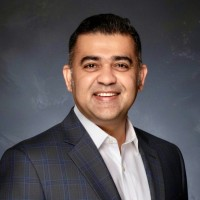
Swami Chandrasekaran
Global Head of AI and Data Labs
KPMG
Follow Capital Considerations on your favorite podcast channel



Stay Informed
Subscribe
Ideas, analysis, and perspectives to help you make your next move with confidence.
What can we help you with today