Crypto's Next Chapter: Regulation, Innovation, Global Impact
August 20, 2025
 Equal Housing Lender. © 2026 M&T Bank and its affiliates and subsidiaries. NMLS #381076. M&T Bank Member FDIC.

Institutional Services Insights
Wealth Management Insights
Who We Are
Log In
Select Business Area

Our Services
Institutional Services Insights
Crypto has been gaining momentum. Regulation is evolving.
What could this mean for your portfolio?
In this episode of Capital Considerations, Tony Roth welcomes Matt Hougan, CIO of Bitwise Asset Management, for a discussion on the future of crypto investing. They explore the potential impact of Bitcoin and Ethereum ETFs, the bipartisan Genius Act’s implications for U.S. crypto regulation, and how stablecoins could disrupt traditional banking.
Whether you're new to crypto or a seasoned investor, this episode offers insights on regulatory trends, and crypto’s growing influence in the global economy.
References to specific securities and companies are merely for explaining the market view and should not be construed as investment advice or investment recommendations of those securities or companies and are not intended and should not be relied upon as the basis for anyone to buy, sell, or hold any security. Holdings and sector allocations may not be representative of the portfolio manager’s current or future investment and are subject to change at any time.
Third-party trademarks and brands are the property of their respective owners. Third parties referenced herein are independent companies and are not affiliated with M&T Bank or Wilmington Trust. Listing them does not suggest a recommendation or endorsement by Wilmington Trust.
The opinions of Matthew Hougan are their own and do not necessarily represent those of Wilmington Trust, M&T Bank or any of its affiliates. Wilmington Trust, M&T Bank and its subsidiaries are not affiliated with Bitwise Asset Management.
Tony Roth, Chief Investment Officer
Matthew Hougan, CIO, Bitwise Asset Management
Tony Roth: Welcome back to Wilmington Trust Capital Considerations. I'm your host, Tony Roth, and I'm excited to be joined today by Matt Hougan. Matt is the Chief Investment Officer of bitwise, which is one of the leading crypto asset managers in the U.S. Matt oversees the firm's investment strategy across a suite of crypto funds, which includes spot Bitcoin and Ethereum ETFs prior to his experience at bitwise, Matt was at the forefront of the ETF revolution where he helped build etf.com and he was a key voice in the ETF industry's growth in mainstream investing. Matt is also frequently featured on CNBC, Bloomberg and in publications like the Wall Street Journal and Forbes. It's an especially interesting time to be talking with Matt as Bitcoin prices are near an all time high, which is something we could probably say at a lot of different points over the last several years, but it's around 120,000 right now at the time of this recording.
And institutional interest in crypto generally is probably stronger than ever as it seems to be moving a bit more mainstream in terms of adoption. At the same time. We've also had some major crypto legislation in Washington with the passage and the signing of the Genius Act, which is more about an area that is a bit different than Bitcoin, which we'll call stable coin, but different than crypto generally.
I'm going to call it stable coin. But, um, certainly addresses some of the non linked, if you will, products or strategies like, like Bitcoin as well. And I'm sure I'm not using these terms correctly, but Matt’s going to help us out and make sure it gets straightened out.
I want to remind everyone that any reference to specific securities or company names are merely for explaining the market view and should not be construed as investment advice or investment recommendations.
So Matt, welcome today and thanks for joining us at this very, very interesting time,
Matt Hougan: Tony. I'm so excited to be here. Thanks for the invitation.
Tony Roth: And the first thing I'll say is that, you know, one of the things we want to get to the bottom of is here at Wilmington Trust, we are bringing some, some ETFs on the platform as acceptable solutions, but we're not yet actively incorporating it in our best thinking.
And it's not because we don't think that Bitcoin has a, a role potentially crypto, but Bitcoin specifically likely has some kind of role in portfolios. It's about trying to find an entry point that makes sense. And so we're not going to start with that question, but we want to get to it in the conversation.
But let's start with just the fact that using Bitcoin, if you will, as really the dominant token within the, what I call the non-linked, if you will. It's not linked to the value of a dollar per se. It's, it's, it just floats right area of crypto and it's at this all time high, 120,000.
It's, it's more than doubled within the last 12 months. It sort of felt like the new administration, the new president was a friend of crypto, whether it was because there was a personal vested interest on the part of the president or not. And I'm not saying that as a political statement, I'm just saying it as a, as an empirical statement, but it seemed like there was rather than a hostile regime, you know, a friendlier regime.
And maybe there was nothing more than that, that seems to have pushed up the price, but maybe it is a lot more than that. So, so let's start with that.
Matt Hougan: Yeah, absolutely. Great framing. I like to think about sort of the direct drivers of the price and then the indirect drivers. The direct driver is very simple, which, you know, Bitcoin's price is set by supply and demand.
It doesn't have cash flows like a company set by supply and demand, and right now there is, sorry to be too simple, more demand than supply, but to be specific, if you look, since the Bitcoin ETFs launched, which was January, 2024, Bitcoin ETFs have bought 700,000 Bitcoin. Publicly traded companies like MicroStrategy have bought 700,000 Bitcoin, so that's 1.4 million Bitcoin in purchases.
And meanwhile, only 300,000 new Bitcoin have been produced. So the demand from ETFs and companies has been almost 5x the new supply. Econ 101 says, more demand than supply means the price go up. And sure enough, the price is up 130% or 40% since the ETF launched. I think maybe the more interesting question is, what are the indirect drivers?
Why are we seeing this broad adoption by ETFs? Why are we seeing this broad adoption by corporate treasuries? And I think there are two reasons. One you touched on, which is the regulatory shift. Under the previous administration, it was overtly anti crypto. Whether that was the SEC or the OCC or other organizations, they put up a lot of roadblocks against crypto, right?
Elizabeth Warren had a quote, unquote, war on crypto, and we swung from that to one that's extremely positive. A pro-crypto SEC, a pro-crypto OCC, pro- crypto CFTC, as you mentioned, the Genius Act, our first piece of crypto legislation. Very engaged with crypto, so a huge regulatory tailwind. And then the other piece I think is rising concerns about debt and deficits.
Just today that we're recording, we have Ray Dalio coming out and saying, you need 15% of your portfolio in Bitcoin or gold to prevent against the coming decline of the dollar as a result of debt and debasement. So we have rising demand or, or the feel for a need for a hedge against that rising debt.
We have improving regulation. We have ETFs that make it easy to invest. You put all those together and you have a pretty good bull market.
Tony Roth: So really interesting set of factors here that are on the demand side while at the same time on the supply side, I'm very much going to misstate this. But isn't it the case that we're coming to the historical end of the total amount of, of Bitcoin that will ever be created?
We're sort of, it's going to be a fixed pool now, sort of going forward. Matt Hougan: That's right. There'll only be 21 million Bitcoin.
There are already 19.5 million, and they come out at a declining rate. So there's
just very little new supply, you know, about 165,000 a year. And as I mentioned, ETFs and public companies are buying 4x or 5x that it, it sometimes it's as simple as that.
Tony Roth: So when you think about. The value of anything in some sense, right? Of course, it is supply and demand and there's a, a clearing price, but to the extent that you're a long-term holder of an asset and you're trying to create a store of value, you need to see lower volatility. In fact, we just published a paper that really talks about the main risk of crypto as being potential go forward volatility, because it goes up, it goes down. And just as a lot of the demand is likely fueled by sort of the meme stock mentality, right?
There are short-term investors that are jumping on the bandwagon in order to make short-term money. That implies a less stable value, if you will.
I mean, how do, how do we figure out as investors whether or not, assuming that, that Mr. Dalio, there's some validity to, to his thesis that the debt burden of the U.S. has caused the, the investor to need to have some other non-dollar denominated storage value.
Matt Hougan: Right.
Tony Roth: How do we understand whether or not the current entry point is a good one or whether or not, if we look in five years from now, there'll be three other bitcoins that get created with their own ecosystems and their own supplies, and they'll all be trading for the equivalent of 10,000.
How do we think that through?
Matt Hougan: So it's a valid question and there's, you know, nothing that comes without risk, right? My family had a beta max, uh, and that turned out to be the wrong bet. So,
Tony Roth: Well, in my family, I'm a famous early adopter of technology and I'm usually the kiss of death.
Matt Hougan: I think it's unlikely that Bitcoin will be replaced for one very simple reason, which is the economic security. The security of a blockchain is directly in relation to its size and value, which creates this enormous network effect moat. If you're building, let's call it digital gold, what you care about is how secure it is in a blockchain based setting, the more valuable something is, the more economic resource goes to securing it, the more secure it is, which creates this economic mode that makes it very difficult for any new asset to overcome it. Now, other cryptocurrencies can do other things. You mentioned stable coins. Those move on blockchains like Ethereum and Solana, we can talk about that later. But for Bitcoin itself, I think it's reached escape velocity.
I think it's unlikely to be challenged. I think the real question many people struggle with is, if Ray Dalio is right, is it Bitcoin or is it gold? Or is it some other asset? And I think from an investment perspective, there's a very easy answer to that, which is, we don't know. The reason I bring that up is most people who have that hedge have 0% Bitcoin, and that's not what the market is telling you right now. Right now the market is telling you Bitcoin's a $2.5 trillion asset. Gold is maybe 20 trillion. If you have a hedged exposure, you're going to want both Bitcoin and gold to be only one or only the other presumes somewhere in the future.
From my perspective, I think the world is moving more digital. I think it's going to move toward Bitcoin. I think Bitcoin will be bigger than gold. But even if you don't agree, if you want to align with Dalio, you need at least some exposure to Bitcoin or you're off market.
Tony Roth: I don't understand at all why it would have to be one or the other.
It could be both. It could be other things as well. It could be the euro, it could be the yuan. It could be—I mean, if the dollar is in a moment of structural parity with some other things that are going to essentially arrive on the landscape as alternatives, every possible destination for value has a different set of characteristics.
But let's just say there are some other ones now that are equally as a, as a group or a bundle of attributes, competitive with a dollar. It could be Bitcoin and gold and some of these other things all altogether.
Matt Hougan: I think we're very early in Bitcoin's adoption, so I'm not worried about the price of a hundred thousand dollars. When I go around and give speeches at the largest wire houses at investor conferences, and I ask the audience, how many of you own Bitcoin? It's still 10% or 15% of the room until that's over 50% we're still very early, so I, I think we're still early and I would at least want to get neutral with the market, which is about a 2% allocation in your portfolio.
Tony Roth: Let's talk about the possible risks, if you will, or challenges to Bitcoin as we move forward. Do you worry at all that a subsequent administration in the US could come in and put the kibosh from a regulatory standpoint and cause the value that has been unleashed, if you will, under the current administration to reverse itself. How do you think that through?
Matt Hougan: The first thing I would say is that probably impacts coins other than Bitcoin, more than Bitcoin.
Because you have to remember, we got a Bitcoin ETF under uh, Gensler at the SEC and under the Biden administration. Bitcoin sort of has escape philosophy on a regulatory perspective. But if we, if we had a very harsh anti crypto, a change in administration, it would pose a challenge to crypto and be negative.
If we continue to have pro crypto regulation, that will be positive. I'm actually not that worried about it. You know, you mentioned the Genius Act earlier. It was a bipartisan bill. It got a large number of Democrats. I think it was the third most bipartisan bill to get through Congress. Crypto seems to be one of the few things where most Americans agree we want reasonable regulation. And my expectation is as Wall Street starts building in crypto, as Larry Fink is building in crypto, as Ray Dalio is in crypto, the risk of these extreme regulatory swings is dramatically reduced. So I, I don't worry that much about a regulatory swing, but if it happens, yeah, that would be negative for crypto.
As it stands right now, regulation is a strong tailwind.
Tony Roth: And what about Ether? I believe Ether is while much smaller in the market cap than Bitcoin. You mentioned Ethereum, which is the blockchain upon which a lot of other types of tokens exist, including Ether, which is, I'm going to use the word competitor to Bitcoin.
I don't know if that's even fair to say, but what about Ether?
Matt Hougan: Yeah, I'm very bullish on Ether the role I think Ethereum will have in the world. Is it's going to be the blockchain on which stable coins, which are US dollars and tokenized assets like stocks and bonds move in the future. So Bitcoin I really think of is a blockchain just for holding Bitcoin, which is a decentralized store of value akin to digital gold.
Then Ethereum is a blockchain that can move other financial assets like stocks and bonds, et cetera. And I know it sounds crazy, but I suspect in 10 years the majority of financial assets will move over blockchains and probably Ethereum [ETH] will be the leader. And that is like a rough, broad case for owning some ETH because that gives you a stake in that infrastructure going forward.
Tony Roth: Clarify that for us please, Matt. Why is it that Ether as just another token on the Ethereum blockchain? Obviously there's some verbal affinity, right, between Ether and Ethereum, but I'm, I'm assuming you're saying something more significant than that. Why? Why is it that Ether somehow gives us a stake? In the rise of Ethereum as the dominant blockchain, or is it something different that you're saying?
Matt Hougan: No, that's exactly right. So if you think of Ethereum, the blockchain, you could think of it like any other financial network, right?
Like the Swift Financial Network, or Visa's Financial Network, or the New York Stock Exchange. It's a financial network on which assets can move. I can send you dollars over Ethereum. When I want to send you dollars over Ethereum, I have to pay a small fee. And that fee is denominated in ETH. In the crypto asset, Ethereum, which people call ETH.
Tony Roth: Right, ETH.
Matt Hougan: That's its Ticker, ETH. So the more people who want to send dollars or stocks or bonds, the more people have to own ETH and who spend it to move those assets over Ethereum. When you spend it, the ETH is destroyed.
It’s removed forever from the world. And so the supply of Ethereum goes down over time. So it's almost like a, a stock buyback type action on ETH. That's why ETH gives you—owning ETH, the asset, gives you a stake in the growth of Ethereum, the blockchain, it's a bit like owning Visa stock gives you a stake in a growth of Visa's network.
Or if you could own Swift, or if you could own the internet, it would give you a stake in the growth of those assets as well.
Tony Roth: What does the supply side look like for ETH? We talked a lot about it from a Bitcoin standpoint.
Matt Hougan: Yeah, so ETH’s supply increases by about 1% a year, but it decreases based on how many people are doing transactions.
So every time you do a transaction, a little bit of ETH is burnt. What we've seen is over the last year or so, supply has been roughly flat. I think it's like plus 30 basis points or something. If demand to use Ethereum ramped up significantly. As stable coins became more prevalent and tokenization became more prevalent, you'd start to see that supply decline over time.
Tony Roth: So if Bitcoin is up in the last eight or nine months, 150%, how has the return of ETH been Ethereum,
Matt Hougan: it's done a V. It's done exceptionally well since April, I think it's up 150-ish percent, but it declines sharply into April. And there are multiple reasons for that. One is, you know, rising expectations around stablecoin growth have excited the ETH community.
Another is that the technology community around ETH changed its direction in a positive way. There’s a lot of reasons to be excited about ETH right now, but it, it's been underperforming Bitcoin over the last year, but it's been outperforming over the last couple months.
Tony Roth: If you had an incremental dollar, if you didn't own any either one and you had to pick one with a, with a, you know, a, a one or two year horizon, which would you pick?
Matt Hougan: Yeah, I think Bitcoin offers a better risk-adjusted return, and E will probably have better absolute returns. So it would depend on your risk tolerance. I think Bitcoin's been significantly de-risked, but still has significant upside.
ETH still has a lot of risk. There's competitive risk from other blockchains. There's still a degree of regulatory risk. There's some adoption risk. But the upside potential is maybe higher. So depends if I was looking at sharp ratios or absolute returns, which one I would choose.
Tony Roth: Okay, so Matt, you have a lot of knowledge around— probably more than anybody in the world—around the vehicles or the implementation options for structuring exposure to both of these, Ethereum and to Bitcoin.
Matt Hougan: Yep.
Tony Roth: Let's start with Bitcoin actually. If you didn't have any special access, you're just a regular routine investor, what would be the most economically efficient way to, because you know, you can go out to stablecoin, but you pay a lot of money to hold that account. There's the ETF. How would you actually do it?
Matt Hougan: ETFs, unless you needed to access it on the weekends or unless you were like the kind of person who stores gold bars under your bed, in which case you'd want to own Bitcoin directly.
Tony Roth: I mean, I know that I could just go to my Fidelity account and buy it directly and not pay anything and just have it sit there. So if I'm a long-term investor, why wouldn't I just do that?
Matt Hougan: Yeah. Fidelity has a pretty good offering. You have to get comfortable with their commission costs, with the trading costs, with their custody set up and with the, the way it fits into your account planning.
If you do that, that's not a bad option either. I think Fidelity is a special company. I still suspect the ETF because you're getting institutional level execution, you're getting a better deal. But as you know from my background, I'm A ETF maximalist. Fidelity is not a bad option though.
Tony Roth: Okay, and what about Ether?
Matt Hougan: Yeah, ether is the currency. Ethereum's the blockchain. In the US right now. Ether ETFs are a very efficient way to get spot exposure to Ether. It leaves you with two issues. One, if you own Ether natively, you can stake it, which is to say you lock it up to help secure the Ethereum network and you can earn about 3% interest from doing that.
Today, you can't do that in an ETF. And if you want to use Ether to send money or engage in Defi, you can't do that with an ETF. It depends on your level of technological sophistication. If you're not crypto savvy, the ETF is a great solution. If you are crypto savvy right now, you can generate higher yield.
If you own it natively, you can open a Coinbase account.
Tony Roth: Bitcoin, if you own it natively in Coinbase, don't you pay like 2% or 3% a year?
Matt Hougan: It depends on your time horizon. But if you're getting that staking yield, which is, which is roughly 3% a year, that can offset it. Look, the, the reality is in, I think in a few months, the SEC is likely to approve staking on Ethereum ETFs.
And at that point, my answer would be the same as it is for Bitcoin.
Tony Roth: So right now, in order to have a direct exposure to Ether, there's a pretty high cost of carry. I mean, if any kind of native purchase is going to be a couple hundred basis points, potentially of annual carry in terms of the fees that the stable coin type places are, are charging, unless there's like a fidelity type of parallel.
Matt Hougan: You’re missing out on that potential yield that you can get in the market in the ETF structure right now. That's definitely true.
OntoTony Roth: Yeah, let's pivot for, and, and talk about, this has been incredibly interesting and useful. I think we've covered it just so much territory, but I want to talk about, Matt, a lot of what this Genius Act was about was not actually about what I call these unlinked tokens, but these ones that are linked, which are, say they're stable, they're connected to the value of the dollar.
Doesn't have to be the dollar, but typically it is. And historically there's been a major player named center.
Now there's a structure and a certainty around which most financial, major financial institutions are probably going to be issuing their own stable coins. So these are going to be essentially backed by treasuries, short-term treasuries, and. Going to be an alternative to putting money in a bank. So if I'm a depositor or an investor, and I typically would either put money into a bank deposit, FDIC insured up at two 50, or I might buy a CD or maybe a money market fund, why would I buy stablecoin?
Because with these other structures where I'm basically just. Holding onto my dollars, but getting some return with a stable coin, historically at least there is no return. You just, you on some kind of asset. I can trade digitally, but so what if I'm not getting a return?
Matt Hougan: Well, mostly you wouldn't, you're not the primary user there.
There are three users in line ahead of you. The first is someone in a country overseas with high inflation that wants access to dollars but can't get them. And all of a sudden they can get them on their cell phone with the push of a button. That's a very big market. The second is crypto traders who want to keep their money in a blockchain ecosystem and don't want to withdraw money out to a traditional bank because it takes too long if they're, say, selling Bitcoin 'cause they want to get flat in the market.
And then the third is companies that have global operations, like Starlink. You can think of the internet service provider who invoices people in stable coins because they can't have banking relationships in a hundred plus countries. Those are the, the three biggest users. The user you're talking about is the US user.
And the reality is under the, the Genius Act, uh, stable coins aren't going to be perfect for that user initially. They don't allow stable coins to pay interest. So you'd be locking up your capital and foregoing the interest you could get in a money market fund or a cd. And right now retail use of stable coins to pay for things is limited.
My expectation over time is that stable coins will be used for retail payments in the US 'cause they're more efficient for merchants. But that will take some time. So you're probably not the primary user, but there's still a large multi-trillion dollar market for these other type of users.
Tony Roth: And is there anything else that we should know about?
So our audience is primarily not in those first three categories, right? There are folks that are in the fourth category. I think that there's been a fair amount of, from the perspective of those folks, kind of noise, frankly, around this Genius Act without really understanding what it's about or why it's, there's been so much focus on it. Or why it even has happened.
Is there anything that we should be aware of? Is there an opportunity for, for us here or just we can put it aside and really focus on whether we should be adding Bitcoin and Ether, et cetera, to our portfolios?
Matt Hougan: I think there is an opportunity. So in, in terms of why it happened, there are a couple things worth noting.
One is that major banks want to issue these stable coins 'cause it's an enormous business. The largest stable coin issuer tether, which is based overseas in some quarters, makes as much money as Goldman Sachs, but only has 200 employees versus I think 16,000 for, for Goldman or something. Um, this is a very profitable business because they generate the fees.
So Wall Street wanted in on this. This is one reason it happened. The second is it creates a new buyer for US treasury debt because you have all these other users I just talked about.
Tony Roth: Yeah,
Matt Hougan: International consumers, businesses, and that's good for the government. So the government wanted it. That's why it's here.
What it's going to mean is there's going to be explosion of stable coin issuance, an explosion of stablecoin growth. The US Secretary of Treasuries says it's going to go from 250 billion to $3 trillion in the next five years.
What that means to an investor is you may want exposure to this ecosystem, which you can get either through owning assets like Ether and Solana. Or by owning companies like Circle or Coinbase that participate in this space. Or ETFs that track those companies or assets, will it disrupt mainstream bank services? I think the likelihood of that is low.
There are end arounds where you will see stable coins offering interest-like returns to investors.
And I think that's probably something to monitor, but the big takeaway is this is going to be a major multi-trillion dollar trend and maybe you want some exposure to it.
Tony Roth: Are the stable coins in your expectation going to exist and trade primarily on Ethereum?
Matt Hougan: Yeah, I think Ethereum will be the largest Blockchain. Have the largest share. Absolutely. Yeah.
Tony Roth: For the reasons we've already discussed. You think that owning Ether. Is a good substitute for the growth, for participating in the growth of that particular blockchain, as well as the more general proposition around crypto, you know, as an alternative to Bitcoin.
So you're sort of getting two birds with one stone, um, which is why there's more upside, but because it's smaller still and less developed more risk.
Matt Hougan: That's exactly right. Yeah. You have it exactly right.
Tony Roth: Got it. What haven't we talked about that we should, we should make sure our audience is aware of?
Matt Hougan: I could throw out a couple things and see what sticks.
One is from a portfolio construction perspective. Crypto is just a great asset. If you strip it of the emotion of the words crypto, and you were to look at its characteristics, it's liquid. It's not historically highly correlated. It has some correlation but not highly correlated with stocks or bonds. It's volatile and has the potential for high returns.
That's a pretty good group of characteristics. So I do think from a portfolio perspective, that's pretty exciting. The other thing I like to point out. Is that our existing financial system could be much better. It could be 24/7/365, and global. If you just get your hands dirty on crypto for a little bit of time, I think it can really be eye-opening.
If you find a crypto friend and ask them to show you how DeFi, which is decentralized finance, really works, that sort of 10 minute demo can be eye- opening to sort of what finance could be like in the future. So I, I do like to talk to people about. How strange it is that stock trade from 9:30 to 4:00 five days a week and settle T+1. And I like to sort of open their eyes to maybe what a better future could be.
Look, crypto has lots of risks. It has lots of need for regulation. There's been lots of blowups, there's lots of reasons to be critical of it, but there are also lots of reasons to be hopeful for what it could do for economic growth and efficiency in the future.
Tony Roth: So just to close then to make sure we have a balanced picture.
It's interesting that China and Russia, for example, I believe, if I have it correct, have pretty much outlawed Bitcoin.
Matt Hougan: Yeah.
Tony Roth: And I believe the reason is that it's, it was available as a way for actors in those countries to conceal activity and wealth, and that's not well looked upon in, in a totalitarian state, right?
They need to be able to have transparency into what people are doing, and, and money is form of power, so they didn't like that. Is it important that other major economies. Essentially turn around at least China, perhaps at some point on Bitcoin or is that not important? And even beyond that, what are the major risks for Bitcoin?
Matt Hougan: Yeah, it would be helpful if China turns around on, on Bitcoin right now they're, they're turning around on stable coins in a hurry, so they're going to be embracing parts of the crypto market and I think they'll be sucked into the sort of global embrace of crypto over time. That will definitely be helpful.
And it is a, a freedom-enhancing technology. It's an asset that you can own that can't be seized directly by the government in many circumstances. There's a lot to be said for it. From a a risk perspective, the biggest risk in crypto from an investor perspective is themselves. It's a very volatile asset.
It's more volatile than most assets people own. Much bigger than technological risk or regulatory risk or custody risk or quantum computing risk is the risk that you'll, you know, to go back to your question, where do we enter that? You'll buy Bitcoin and it will fall 25% and you'll sell and be done. It's the best performing asset in the world over the last 15 years.
Within that time period, it had seven 70% drawdowns. And so if any of those shook you out. Then you didn't benefit from the upside. I think there's less volatility today, but it's still very volatile. So the biggest risk is behavioral risk. And uh, that's one that, that people should think about.
It means they should size their position appropriately. If they are going to invest. Maybe it means they should dollar-cost-average their way in to attenuate that risk. But that's the biggest risk I would, I would think about.
Tony Roth: Would you be surprised if Bitcoin does not drop below a hundred thousand at some point?
Matt Hougan: It's entirely possible. It's a volatile asset for sure, but my bias would be, I bet it gets to 200,000 before it gets to a hundred thousand, but it could absolutely drop below a hundred thousand dollars. The thing I'll say about that is I, I bet there are people listening now who are saying to themselves, I would buy it if it fell to 90.
Tony Roth: Yeah.
Matt Hougan: And what I would say is write that down on a piece of paper, because when it falls to 90 you're not going to want to buy it. Right. That's going to be when the, the “Bitcoin is over” stories come out. They've, they've come out every year. There've been 431 times that the mainstream media has declared Bitcoin dead.
If it falls to 90 again, they're going to do it again. So, yeah, will it go below a hundred? It very much could.
Tony Roth: Well, we're going to have to stop there, but Matt you've been incredibly generous with your time and your, and your knowledge. Um, I really want to thank you and I want to remind our audience that to listen to past episodes and for full roundup of our thought leadership and the investment and planning space, please go to wilmingtontrust.com and we'll be back with another episode of Capital Considerations shortly.
So thank you all so much.
DISCLAIMER
This podcast is for educational purposes only and is not intended as an offer or solicitation for the sale of any financial product. Or service or recommendation or determination that any investment strategy is suitable for a specific investor. Investors should seek financial advice regarding the suitability of any investment strategy based on the investor's objectives, financial situation, and particular needs.
The information on Wilmington Trust's capital considerations with Tony Roth has been obtained from sources believed to be reliable, but its accuracy and completeness are not guaranteed. The opinions, estimates, and projections constitute the judgment of Wilmington Trust as of the date of this podcast and are subject to change without notice. The opinions of any guests on the Capital Considerations podcast who are not employed by Wilmington Trust or M& T Bank are their own and do not necessarily represent those of M& T Bank Corporate or any of its affiliates. Wilmington Trust is not authorized to and does not provide legal or tax advice.
Our advice and recommendations provided to you is illustrative only and subject to the opinions and advice of your own attorney, tax advisor, or other professional advisor.
Diversification does not ensure a profit or guarantee against a loss. There is no assurance that any investment strategy will be successful.
Past performance cannot guarantee future results. Investing involves a risk, and you may incur a profit or a loss. Any reference to company names mentioned in the podcast should not be constructed as investment advice or investment recommendations of those companies. Third party trademarks and brands are the property of their respective owners.
Third parties referenced herein are independent companies and are not affiliated with M& T Bank or Wilmington Trust. Listing them does not suggest a recommendation or endorsement by Wilmington Trust. Private market investments are only available to investors that meet the U. S. Securities and Exchange Commission's definition of qualified purchaser and accredited investor.
Facts and views presented in this report have not been reviewed by and may not reflect information known to professionals in other business areas of Wilmington Trust or M& T Bank and may provide or seek to provide financial services to entities referred to in this report. M& T Bank and Wilmington Trust have established information barriers between their various business groups.
As a result, M& T Bank and Wilmington Trust do not disclose certain client relationships or compensation received from such entities in their reports. Investment products are not insured by the FDIC or any other governmental agency, are not deposits of or other obligations of or guaranteed by Wilmington Trust, M& T Bank, or any other bank or entity, and are subject to risks including a possible loss of the principal amount invested.
Wilmington Trust is a registered service mark used in connection with various fiduciary and non fiduciary services offered by certain subsidiaries of M& T Bank Corporation, including, but not limited to, Manufacturers and Traders Trust Company, M& T Bank, Wilmington Trust Company, WTC, operating in Delaware only, Wilmington Trust N.A., WTNA, Wilmington Trust Investment Advisors, Inc., WTIA. Wilmington Funds Management Corporation, WFMC, Wilmington Trust Asset Management LLC, WTAM, and Wilmington Trust Investment Management LLC, WTIM. Such services include trustee, custodial, agency, investment management, and other services. International corporate and institutional services are offered through M& T Bank Corporation's international subsidiaries.
Loans, credit cards, retail and business deposits, and other business and personal banking services and products are offered by M& T Bank, member FDIC.
Copyright 2025 M& T Bank and its affiliates and subsidiaries. All rights reserved.
Please complete the form below and one of our advisors will reach out to you.
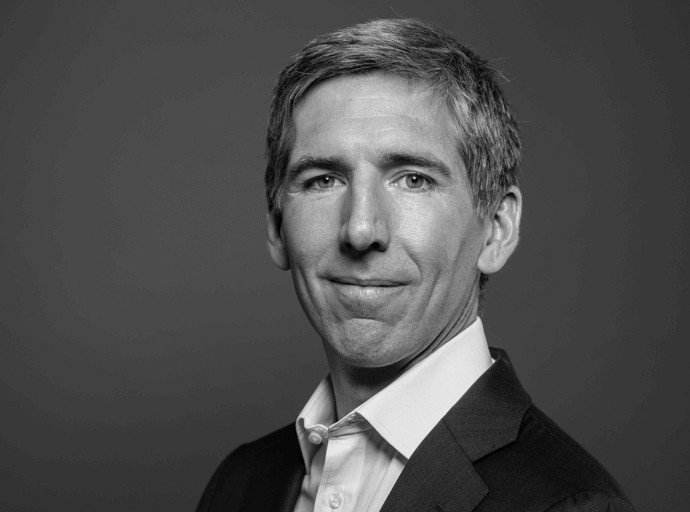
Matthew Hougan
CIO
Bitwise Asset Management
Follow Capital Considerations on your favorite podcast channel



Stay Informed
Subscribe
Ideas, analysis, and perspectives to help you make your next move with confidence.
What can we help you with today